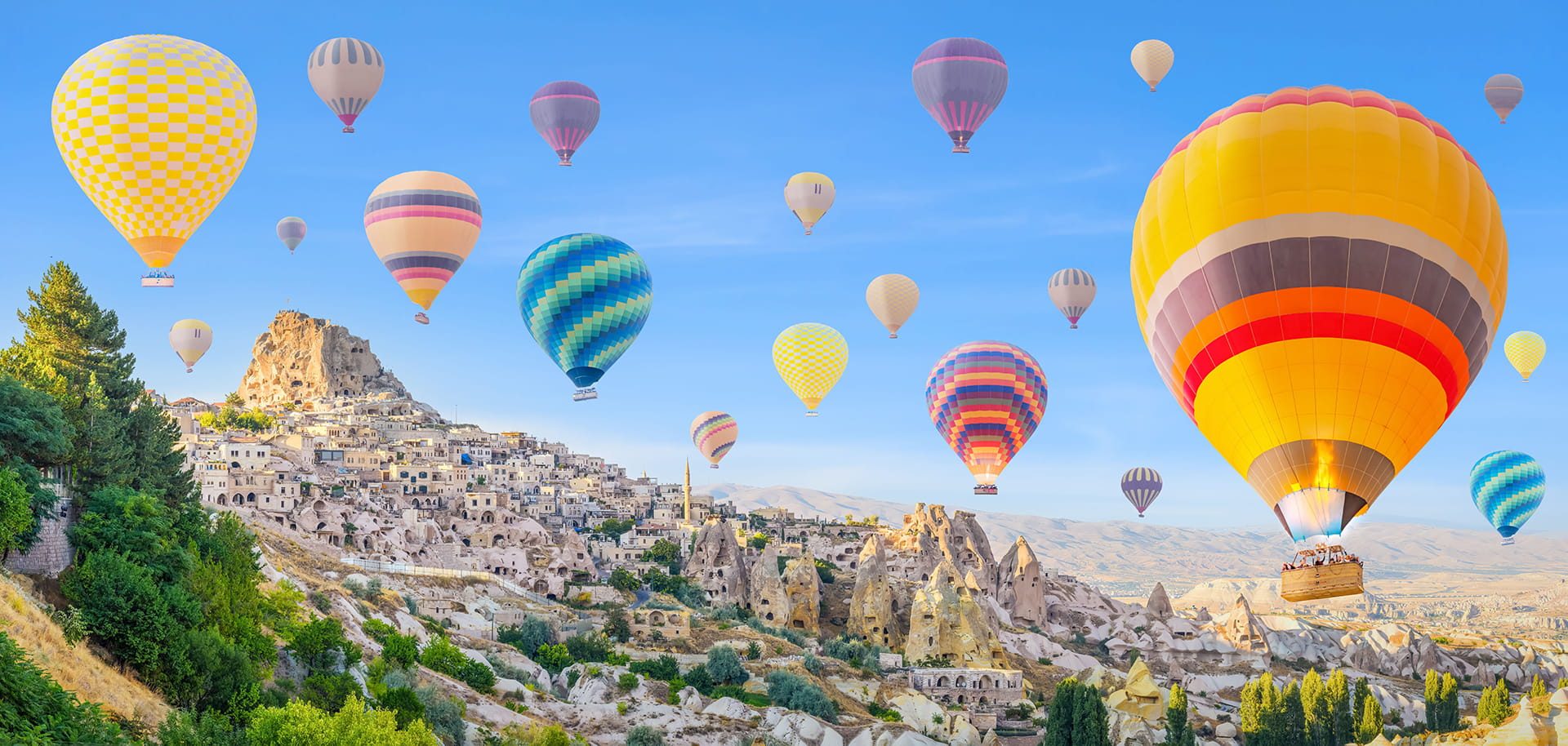
Trip planning answers for Cappadocia visitors — and clear details for balloon flights.
Three full days is a strong minimum: one for a balloon morning (with a weather backup day), one for valleys and Göreme Open-Air Museum, and one for an underground city plus viewpoints like Uçhisar. Four to five days feels relaxed if you also want hiking, pottery villages, or slower cave-hotel mornings.
Göreme is the easiest base for restaurants, walkable valleys, and early balloon pickups. Uçhisar suits quieter evenings with castle views; Ortahisar feels more local. Ürgüp works well if you prefer a larger town and wine restaurants. See the Visitor Guide for a fuller stay comparison.
No. Ballooning is iconic, but the region stands on its own through fairy chimneys, cave churches, underground cities, and valley walks. Many travelers watch balloons from a terrace at sunrise, then explore on foot. Fly when weather, budget, and timing align — not because you feel pressured.
April–June and September–October usually balance pleasant temperatures with reliable dawn flying conditions. July–August are hotter and busier; winter can be snowy and quieter, with more weather cancellations for flights. Always keep a spare morning if a balloon flight matters to you.
Most operators pick guests up between roughly 04:15 and 05:00, timed to sunrise. The full outing — transfer, inflation, flight, landing, and return — often runs about three hours. Plan an early night the evening before.
Yes. Staying in Göreme, Ürgüp, Uçhisar, Avanos, or Ortahisar makes early transfers routine for hotels. Mention a possible balloon morning when you check in so reception knows you may leave before dawn.
Shared flights are the most common first experience and put you among the iconic crowd of balloons. Smaller or private baskets feel quieter and give more space for photos. See our Ballooning Guide for a neutral comparison of formats.
Most operators set a minimum age (often around 6–7) because children must stand, hold ropes for landing, and follow briefings. Rules vary — always confirm with the operator you choose. Families with younger children often watch balloons from a terrace instead.
Commercial ballooning in Cappadocia is regulated by Turkey’s civil aviation authority (SHGM). Reputable operators use licensed pilots, inspected equipment, and daily weather go/no-go decisions. Choose companies that fly conservatively — cancellations for wind are a sign of good judgement, not a failure.
If wind, visibility, or other conditions are unsafe, pilots cancel. The decision is usually final on the morning. Responsible operators refund or offer another date when they cancel for weather. Build spare mornings into your stay so a scrubbed flight does not ruin the trip.
Licensed commercial flights carry aviation liability cover. Separately, travelers should carry their own travel insurance — and confirm it covers adventure activities such as ballooning if that matters to them.
Airtime is commonly around 45–70 minutes, sometimes longer when conditions allow. Including pickup, inflation, landing, and return, the whole outing often takes about three hours. Read the sunrise experience guide for a minute-by-minute feel.
Altitude varies depending on wind conditions and the pilot's discretion, but typically ranges from just a few metres above the valley floor (giving incredible close-up views of fairy chimneys) up to 500–700 metres above ground at maximum elevation. Your pilot will adjust altitude throughout the flight to give you the best possible perspectives of the landscape.
Many first-timers with mild height anxiety manage fine because the basket moves with the wind and feels stable. Gondolas have solid waist-high walls. If fear of heights is severe, talk with a doctor first — or enjoy sunrise from a terrace or castle viewpoint instead.
Some landings are gentle bumps; others bounce once or tip the basket. Pilots brief the bend-knee, hold-the-ropes posture beforehand. Ground crews meet the balloon. Many operators then offer a short celebration toast and a flight certificate — traditions vary by company.
Dress in comfortable layers. Pre-dawn temperatures at the launch site can be significantly cooler than daytime temperatures — even in summer. We recommend: long trousers or jeans, layers you can remove as it warms up, flat closed-toe shoes (no sandals or high heels — you'll be climbing in and out of a gondola). In winter, add a warm jacket, gloves, and a scarf. Hats can be useful. Avoid anything that could blow away easily.
Yes — phones, cameras, and GoPros are welcome on most flights. Use a wrist strap. Dawn light is excellent for photos. Drones need proper permissions and are often restricted near launch fields; check local rules before you fly one.
Eat lightly or skip a heavy meal before pickup. Motion sickness is uncommon, but a full stomach at 04:30 can feel rough. Most hotels serve breakfast after you return mid-morning.
Most mornings in spring and autumn fly. Winter sees more cancellations; summer is usually flyable but hotter later in the day. Exact rates vary year to year. The practical rule: stay at least two or three nights if a flight matters to you.
Watch sunrise from a terrace or Uçhisar, then walk a valley or visit Göreme Open-Air Museum. Keep a spare morning free. When arranging a flight elsewhere, ask what happens on weather cancellations before you commit.
No. Cave-hotel terraces, valley rims, and Uçhisar Castle offer spectacular ground views of the balloon field. Many travelers prefer this once — or instead of flying. See About Cappadocia for viewpoints.
Still Have Questions?
Ask about seasons, stays, or flights — we are happy to help you plan the trip, not just a booking.